Our Work
Case Study #1
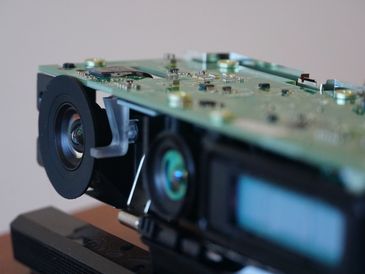
The company we were working for had built a prototype based on using the first-generation Kinect camera for depth sensing. They had removed the plastic covers and other extraneous parts and cut the sides of the sheetmetal frame in order to fit the device into their product — a creative idea for a quick proof-of-concept prototype.
When we were brought in to help this group scale the product, we quickly identified that this depth camera design would not scale for production. The Kinect sensor uses structured IR light and an infrared camera together with a proprietary chip from PrimeSense to produce the depth image — taking the product apart had drastically changed that calibration, so while the POC was sufficient for a quick demo, it was not giving accurate data.
We helped the team design a new optical bench and new PCBAs and FPCs, worked with a manufacturing test and calibration organization, built an assembly flow and fixtures, established a supply chain, and handed everything off to a contract manufacturer.
Case Study #2
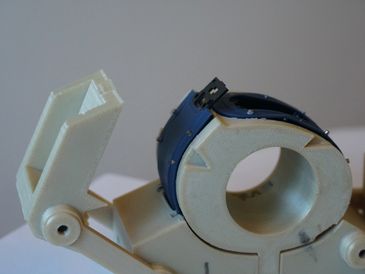
Concurrent was brought in to help obtain more of an optical sub-assembly being built by a third-party vendor. The internal team were not familiar with optics and could not ascertain what was needed to scale to production volumes.
After initial assessment, it became clear the design was inherently not scalable — it involved re-using components from a development kit that was no longer in production, limiting total volume to about 15–20 units. We simultaneously worked with the existing supplier while running a broader vendor RFP to re-design the optics module entirely.
25%
Weight reduction
10%
Optical performance improvement
75%
Module cost savings